How Much Does a Taxi Cost in the UK? A Guide to How Fares Are Worked Out
There is no single UK taxi price. In short: taxi fares in Great Britain are set locally, not nationally — and pre-booked private hire prices work differently again. The council sets taxi fares and drivers cannot charge more than the amount showing on the meter at the end of your journey, with the only exception being where the journey finishes outside the council area and the fare has been agreed beforehand. By contrast, the council cannot set fares charged for private hire journeys, so passengers should get a quote from the operator before booking their journey, and drivers are not allowed to charge more than the amount agreed with the operator.
That distinction — regulated meter fare vs. operator-quoted price — is the reason a taxi journey can cost a different amount depending on where you are, what type of vehicle you use, and how you book it.
Key Takeaways
- UK taxi fares are not nationally fixed; local licensing authorities regulate hackney carriage (traditional taxi) fares within their own area.
- Private hire vehicles (most pre-booked minicab-style services) are priced by the operator, not the council, so you should always get a quote before travelling.
- Cost is typically influenced by distance, time of day, day of the week, waiting time, and sometimes vehicle type.
- Buckinghamshire Council publishes its own current tariff table as a real example of how time-of-day banding works.
- “Taxi fare” and “taxi price” are often used interchangeably but technically describe two different pricing systems — explained in the FAQ below.
How Taxi Fares Are Actually Set in the UK
Hackney Carriages vs Private Hire Vehicles
UK law treats two types of licensed vehicle differently, and this is the single biggest reason taxi costs vary so much.
Taxis and private hire vehicles differ in their visual features, their requirements for carrying out journeys, and the way their fares are set — taxis (hackney carriages) can be pre-booked but can also be flagged down or approached at a taxi rank, and are identified by a blue and white licence plate and window card. Licensed taxis and private hire vehicles normally display identification issued or required by the relevant licensing authority. Exact plate, sign and display requirements vary by jurisdiction and council area. Private hire vehicles must be pre-booked through a licensed operator under the applicable licensing framework.
The pricing consequence of this is significant: a private hire vehicle cannot be hailed or use ranks and may only carry out journeys that have been pre‑booked through a licensed operator, and its fares are not controlled by the council but are agreed in advance.
Who Regulates the Price — Council or Operator?
| Vehicle type | How it’s hired | Who sets the price | What protects the passenger |
|---|
| Hackney carriage (traditional taxi) | Hailed, rank, or pre-booked | Local licensing authority (meter-based) | Driver cannot charge more than the meter shows at the end of the journey |
| Private hire vehicle (minicab-style, pre-booked) | Pre-booked only, through a licensed operator | The operator | Council cannot set the fare, so the passenger should get a quote before booking, and the driver cannot charge more than the agreed amount |
Because most people booking a journey in advance — for example, for an airport transfer or a routine local trip — are using a private hire vehicle, the practical takeaway is simple: ask for or confirm a price when you book, rather than assuming a meter rate applies.
What Affects the Cost of a Taxi Journey
While exact pricing is set locally (and, for private hire, by the individual operator), the following factors are consistently used across the UK licensing system to structure fares:
| Factor | Why it affects cost |
|---|
| Distance travelled | Metered hackney fares are calculated per set distance increments |
| Time of day | Many councils apply a higher evening/night tariff |
| Day of the week/bank holidays | Sundays and public holidays often fall under a different tariff band |
| Waiting time | Metered taxis typically charge for time spent stationary during a hire |
| Number of passengers | Some tariffs change once a vehicle carries a higher passenger count |
| Booking method | Pre-booked private hire is quoted in advance; hackney carriages are usually metered |
| Journey destination | A journey ending outside the licensing area may be priced differently |
A Worked Example: How Tariffs Work in Practice (Buckinghamshire Council)
Rather than rely on unverifiable national averages, it’s useful to look at one real, current, published example. Buckinghamshire Council — the licensing authority covering Aylesbury — publishes its own hackney carriage tariff.
Buckinghamshire Council sets maximum taxi fares for journeys within Buckinghamshire, and a taxi must have a taximeter fitted which shows the fare payable, which the council checks to confirm shows the correct fare. Fares are split between three tariffs based on time of day, public holidays, and number of passengers and distance, and are correct as of 5 August 2024.
Tariff 1 — valid from 6am to 11pm, Monday to Saturday, with Tariff 2 used instead at any time a taxi is carrying five or more passengers. The published Tariff 1 rate structure is:
| Distance/time | Charge |
|---|
| First 880 yards (804.67 metres) or part thereof | £5.00 |
| Every other 176 yards (160.93 metres) or part thereof | £0.20 |
| Waiting time, per 40 seconds or part thereof | £0.20 |
(Source: Buckinghamshire Council, correct as of 5 August 2024.)
Tariff 2 applies at other times — specifically from 11pm to 6am Monday to Saturday, for any hiring on a Sunday or bank holiday, and for hirings between 4pm and midnight on Christmas Eve and New Year’s Eve — reflecting the common UK pattern of higher rates for unsocial hours. A third tariff band exists for the most restricted public holidays; readers should check Buckinghamshire Council’s published fares page directly for the current Tariff 2 and Tariff 3 rates, as these were not confirmed at the time of writing.
Important: this tariff applies specifically to hackney carriages licensed by Buckinghamshire Council. It does not represent, and should not be confused with, the price of a pre-booked private hire journey, which is set by the individual operator.
UK-Wide Considerations: Why Prices Differ by Area
Because each licensing authority in England and Wales can set its own hackney carriage tariff, two towns a short distance apart can have genuinely different metered rates. Scotland and Northern Ireland operate their own separate licensing frameworks. This is also why generic “£ per mile” figures you may see quoted online should be treated with caution — they are rarely representative of every local authority, and fares change periodically following council review processes.
Private hire pricing adds a further layer of variation, since — unlike the metered hackney system — the council cannot set fares charged for private hire journeys, so you should get a quote from the operator before booking. This means two private hire operators in the same town can legitimately charge different prices for a similar journey.
Aylesbury and Buckinghamshire Considerations
Aylesbury falls under Buckinghamshire Council’s unitary licensing authority, which — as shown above — publishes and enforces its own hackney carriage tariff and separately confirms that private hire pricing is operator-led rather than council-set. Passengers travelling to or from Aylesbury on a pre-booked basis (for example, for an airport transfer, a hospital appointment, or an evening out) are typically using a private hire service, meaning the fare structure above does not directly apply — instead, the operator will quote a price at the time of booking. If you want to know current Aylesbury-specific private hire pricing, ABC Taxis 247’s taxi price guide for Aylesbury is the right place to check, rather than the council’s hackney tariff.
What to Check Before You Book
- Is the vehicle a hackney carriage (meter-based, council-regulated) or a private hire vehicle (operator-quoted)?
- If private hire: have you received a clear price or fare estimate before the journey begins?
- Does the quote include waiting time, if relevant (e.g. flight delays, hospital appointments)?
- Is the driver and vehicle properly licensed? Identification and display requirements vary by licensing authority, so check the operator and vehicle details where available.
- Does the price change for bank holidays, late-night, or early-morning travel?
- For accessibility needs, has the vehicle type been confirmed in advance? (See our wheelchair-accessible taxi checklist.)
Common Questions
Is a taxi cheaper than a private hire vehicle (minicab)?
Neither is universally cheaper. Hackney carriages use a council-regulated meter, while private hire fares are not set by the council and should be quoted by the operator before booking. Which is cheaper depends on the journey, time of day, and operator.
Can a taxi driver charge more than the meter shows?
No — the council sets taxi fares and drivers cannot charge more than the amount showing on the meter at the end of the journey, except where the journey finishes outside the council area and a fare has been agreed beforehand.
Can a private hire driver change the price after I’ve booked?
No — drivers are not allowed to charge more than the amount you agree with the operator. Always confirm the price at the time of booking.
Why are taxis more expensive at night or on bank holidays?
Many councils, including Buckinghamshire, apply a different tariff during night hours, on Sundays, on bank holidays, and around Christmas and New Year, reflecting reduced availability and demand during unsocial hours.
Do all UK taxis use the same tariff?
No. Each local licensing authority sets its own hackney carriage tariff for journeys within its area, so identical journeys can be priced differently depending on which council area you’re in.
What’s the difference between a “taxi fare” and a “taxi price”?
This distinction matters more than most people realise. A “fare” technically refers to a metered, council-regulated amount charged by a hackney carriage — the council sets the fare and the driver cannot charge more than the meter shows. A “price” more accurately describes what you pay for a private hire (pre-booked) journey, where the operator quotes you a price before the journey begins rather than a meter calculating it in real time. In everyday conversation the two words are used interchangeably, but understanding the difference explains why one journey might be “metered” and another “quoted” — and why it’s always worth confirming which applies before you travel.
Sources
- Buckinghamshire Council — Taxi passenger fares (buckinghamshire.gov.uk)
- Buckinghamshire Council — Understand the difference between a taxi and private hire vehicle (buckinghamshire.gov.uk)
- Buckinghamshire Council — Hackney carriage and private hire vehicle licences policy (buckinghamshire.gov.uk)
Get a Clear Quote for Your Aylesbury Journey
Since private hire pricing is quoted rather than metered, the simplest way to know what your journey will cost is to ask. ABC Taxis 247 can provide a price for your specific Aylesbury journey when you book — visit our Aylesbury taxi prices page or get in touch directly for a quote.
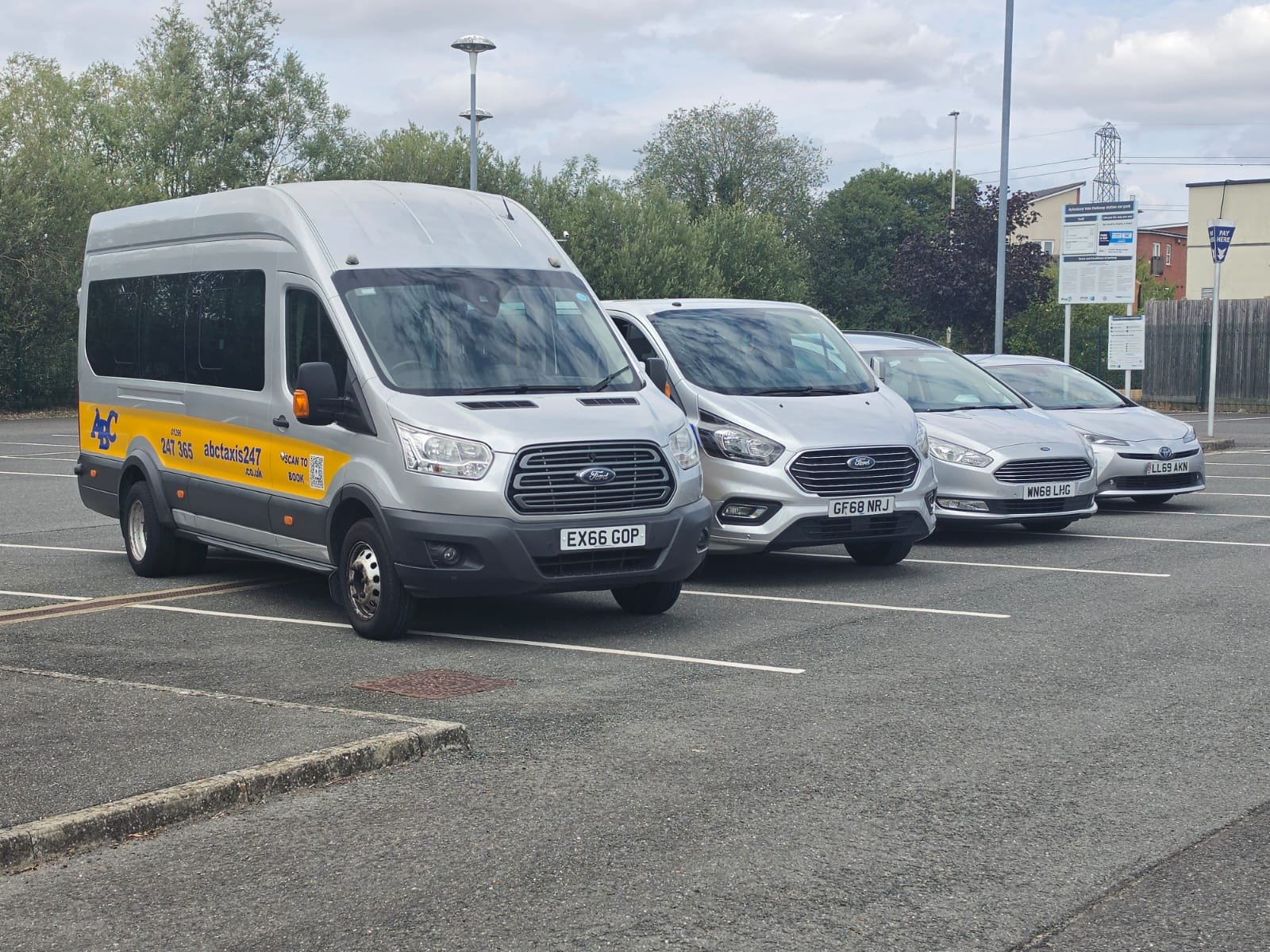

How Much Does a Taxi Cost in the UK? A Guide to How Fares Are Worked Out
There is no single UK taxi price. In short: taxi fares in Great Britain are set locally, not nationally — and pre-booked private hire prices work differently again. The council sets taxi fares and drivers cannot charge more than the amount showing on the meter at the end of your journey, with the only exception being where the journey finishes outside the council area and the fare has been agreed beforehand. By contrast, the council cannot set fares charged for private hire journeys, so passengers should get a quote from the operator before booking their journey, and drivers are not allowed to charge more than the amount agreed with the operator.
That distinction — regulated meter fare vs. operator-quoted price — is the reason a taxi journey can cost a different amount depending on where you are, what type of vehicle you use, and how you book it.
Key Takeaways
How Taxi Fares Are Actually Set in the UK
Hackney Carriages vs Private Hire Vehicles
UK law treats two types of licensed vehicle differently, and this is the single biggest reason taxi costs vary so much.
Taxis and private hire vehicles differ in their visual features, their requirements for carrying out journeys, and the way their fares are set — taxis (hackney carriages) can be pre-booked but can also be flagged down or approached at a taxi rank, and are identified by a blue and white licence plate and window card. Licensed taxis and private hire vehicles normally display identification issued or required by the relevant licensing authority. Exact plate, sign and display requirements vary by jurisdiction and council area. Private hire vehicles must be pre-booked through a licensed operator under the applicable licensing framework.
The pricing consequence of this is significant: a private hire vehicle cannot be hailed or use ranks and may only carry out journeys that have been pre‑booked through a licensed operator, and its fares are not controlled by the council but are agreed in advance.
Who Regulates the Price — Council or Operator?
Because most people booking a journey in advance — for example, for an airport transfer or a routine local trip — are using a private hire vehicle, the practical takeaway is simple: ask for or confirm a price when you book, rather than assuming a meter rate applies.
What Affects the Cost of a Taxi Journey
While exact pricing is set locally (and, for private hire, by the individual operator), the following factors are consistently used across the UK licensing system to structure fares:
A Worked Example: How Tariffs Work in Practice (Buckinghamshire Council)
Rather than rely on unverifiable national averages, it’s useful to look at one real, current, published example. Buckinghamshire Council — the licensing authority covering Aylesbury — publishes its own hackney carriage tariff.
Buckinghamshire Council sets maximum taxi fares for journeys within Buckinghamshire, and a taxi must have a taximeter fitted which shows the fare payable, which the council checks to confirm shows the correct fare. Fares are split between three tariffs based on time of day, public holidays, and number of passengers and distance, and are correct as of 5 August 2024.
Tariff 1 — valid from 6am to 11pm, Monday to Saturday, with Tariff 2 used instead at any time a taxi is carrying five or more passengers. The published Tariff 1 rate structure is:
(Source: Buckinghamshire Council, correct as of 5 August 2024.)
Tariff 2 applies at other times — specifically from 11pm to 6am Monday to Saturday, for any hiring on a Sunday or bank holiday, and for hirings between 4pm and midnight on Christmas Eve and New Year’s Eve — reflecting the common UK pattern of higher rates for unsocial hours. A third tariff band exists for the most restricted public holidays; readers should check Buckinghamshire Council’s published fares page directly for the current Tariff 2 and Tariff 3 rates, as these were not confirmed at the time of writing.
Important: this tariff applies specifically to hackney carriages licensed by Buckinghamshire Council. It does not represent, and should not be confused with, the price of a pre-booked private hire journey, which is set by the individual operator.
UK-Wide Considerations: Why Prices Differ by Area
Because each licensing authority in England and Wales can set its own hackney carriage tariff, two towns a short distance apart can have genuinely different metered rates. Scotland and Northern Ireland operate their own separate licensing frameworks. This is also why generic “£ per mile” figures you may see quoted online should be treated with caution — they are rarely representative of every local authority, and fares change periodically following council review processes.
Private hire pricing adds a further layer of variation, since — unlike the metered hackney system — the council cannot set fares charged for private hire journeys, so you should get a quote from the operator before booking. This means two private hire operators in the same town can legitimately charge different prices for a similar journey.
Aylesbury and Buckinghamshire Considerations
Aylesbury falls under Buckinghamshire Council’s unitary licensing authority, which — as shown above — publishes and enforces its own hackney carriage tariff and separately confirms that private hire pricing is operator-led rather than council-set. Passengers travelling to or from Aylesbury on a pre-booked basis (for example, for an airport transfer, a hospital appointment, or an evening out) are typically using a private hire service, meaning the fare structure above does not directly apply — instead, the operator will quote a price at the time of booking. If you want to know current Aylesbury-specific private hire pricing, ABC Taxis 247’s taxi price guide for Aylesbury is the right place to check, rather than the council’s hackney tariff.
What to Check Before You Book
Common Questions
Is a taxi cheaper than a private hire vehicle (minicab)?
Neither is universally cheaper. Hackney carriages use a council-regulated meter, while private hire fares are not set by the council and should be quoted by the operator before booking. Which is cheaper depends on the journey, time of day, and operator.
Can a taxi driver charge more than the meter shows?
No — the council sets taxi fares and drivers cannot charge more than the amount showing on the meter at the end of the journey, except where the journey finishes outside the council area and a fare has been agreed beforehand.
Can a private hire driver change the price after I’ve booked?
No — drivers are not allowed to charge more than the amount you agree with the operator. Always confirm the price at the time of booking.
Why are taxis more expensive at night or on bank holidays?
Many councils, including Buckinghamshire, apply a different tariff during night hours, on Sundays, on bank holidays, and around Christmas and New Year, reflecting reduced availability and demand during unsocial hours.
Do all UK taxis use the same tariff?
No. Each local licensing authority sets its own hackney carriage tariff for journeys within its area, so identical journeys can be priced differently depending on which council area you’re in.
What’s the difference between a “taxi fare” and a “taxi price”?
This distinction matters more than most people realise. A “fare” technically refers to a metered, council-regulated amount charged by a hackney carriage — the council sets the fare and the driver cannot charge more than the meter shows. A “price” more accurately describes what you pay for a private hire (pre-booked) journey, where the operator quotes you a price before the journey begins rather than a meter calculating it in real time. In everyday conversation the two words are used interchangeably, but understanding the difference explains why one journey might be “metered” and another “quoted” — and why it’s always worth confirming which applies before you travel.
Sources
Get a Clear Quote for Your Aylesbury Journey
Since private hire pricing is quoted rather than metered, the simplest way to know what your journey will cost is to ask. ABC Taxis 247 can provide a price for your specific Aylesbury journey when you book — visit our Aylesbury taxi prices page or get in touch directly for a quote.
Share This: