Taxi vs Uber in the UK: What’s Different When You Pre-Book?
Quick Answer
There is no single answer to whether a taxi or Uber is cheaper, better or more convenient in the UK. They are not direct equivalents — they operate under different booking rules, different pricing structures and different frameworks: a taxi is a licensed vehicle category, while Uber is a booking platform. The right choice depends on where you are, when you are travelling, what you need and what is available.
This guide explains how each option actually works in the UK — particularly when you pre-book — so that you can compare them for your own journey.
Taxi vs Uber: At-a-Glance Comparison
| Hackney carriage (taxi) | Private hire vehicle (PHV) | Uber |
|---|
| What is it? | Licensed vehicle category — can be hailed or ranked | Licensed vehicle category — pre-booked journeys only | Booking platform/service provider — not a separate vehicle-licensing category |
| How do you book? | Street hail, taxi rank, phone, or pre-book | Must be pre-booked through a licensed operator | Requested via the Uber app |
| Pricing | Metered fares up to a council-set maximum | Fares agreed in advance with the operator | Upfront pricing; subject to dynamic pricing |
| Can you hail it? | Yes | No (illegal) | No — journeys are booked through the app |
| Who sets fares? | Local licensing authority sets maximum tariffs | Operator sets their own fares | Uber’s algorithm calculates the upfront fare |
| Payment | Varies — cash, card or contactless depending on operator | Varies by operator | Normally handled through the app |
| Driver licensing | Licensed by local licensing authority | Licensed by local licensing authority | Journeys are typically provided by locally licensed drivers; the services available vary by location |
Note: Uber is compared here as a booking platform, not as an equivalent legal vehicle category. Many Uber journeys are provided by locally licensed private hire vehicles and drivers, but the services available through Uber vary by location — for example, Uber also offers Black Cab booking in London.
Taxi, Hackney Carriage and Private Hire: What’s the Difference?
Most people use the word “taxi” for any car they hire for a journey. In everyday conversation, that is perfectly normal. But in England, hackney carriage and private hire are distinct licensing categories — and understanding the difference helps explain why booking, pricing and availability can vary so much. (Scotland and Northern Ireland operate under their own frameworks, covered later in this guide.)
Hackney carriage
A hackney carriage is the legal term for what most people would call a taxi. A licensed hackney carriage can legally pick up passengers without a prior booking — either by being hailed on the street or from a taxi rank — and must generally use a calibrated meter to charge fares no higher than those set by the Council. They can also be used for pre-booked journeys.
The key features: you can hail one, use one from a rank, or book one in advance. The meter runs during the journey. The maximum fare is set by the local licensing authority — and those maximum fares differ between council areas.
Private hire vehicle
A private hire vehicle cannot be hailed or use ranks and may only carry out journeys that have been pre-booked through a licensed operator; its fares are not controlled by the Council and are agreed in advance.
This category covers most local minicab and taxi companies across the UK. When you phone a local firm and book a car for a specific time, you are almost always booking a private hire vehicle — even though you might call it a taxi.
The fare is typically agreed before the journey starts, and it is set by the operator rather than the council.
Why this matters
The distinction has real practical consequences. A hackney carriage driver can legally stop for you if you wave one down. A private hire driver cannot — a journey must be booked through a licensed operator before the journey begins. The pricing is different. The regulatory oversight is different. And when you compare either of these with Uber, understanding where Uber fits in the framework matters too.
Is Uber a Taxi or Private Hire?
Uber is neither — at least not in the sense of being a vehicle-licensing category. Uber is a booking platform and service provider, not a separate vehicle-licensing category. The vehicles and drivers that fulfil Uber journeys are licensed under the existing local frameworks.
In practice, many Uber journeys in the UK are provided by locally licensed private hire vehicles and drivers. However, the services available through Uber can vary by location. For example, Uber also offers Black Cab booking in London — meaning that, in that case, the journey is fulfilled by a licensed hackney carriage rather than a private hire vehicle.
What makes Uber distinctive is its operating model: bookings are made through the app, passengers are matched with available drivers algorithmically, and fares are calculated by Uber’s pricing system rather than agreed by phone with an operator or run on a council-set meter (except where the service booked is itself a metered vehicle category).
So when people ask “is Uber a taxi?”, the short answer is: Uber itself is a platform. Whether a particular Uber journey is provided by a private hire vehicle or another vehicle type depends on the service selected and the location.
Pre-Booking a Taxi vs Booking Uber
This is the core of the comparison, and it is where the practical differences are sharpest.
What “pre-booked” actually means
In UK licensing terms, “pre-booked” means the journey has been arranged before travel — through a licensed operator. It does not necessarily mean the journey was booked days or weeks in advance. A phone call made 15 minutes before you need to leave still counts as a pre-booked journey if the booking is placed with a licensed operator before the vehicle arrives.
This is an important distinction. All private hire vehicle journeys must be pre-booked through a licensed operator — it is a legal requirement. But “pre-booked” is not the same as “booked well in advance” or “advance reservation.” A booking made at short notice through a licensed operator is still a pre-booked journey.
An advance reservation — arranging a vehicle for a specific date and time in the future — is a separate concept. Many local taxi and private hire operators offer this, and Uber offers it through Uber Reserve. But the guarantees, mechanisms and terms differ.
Pre-booking with a local taxi or private hire operator
When you phone a local taxi or private hire company and book a journey — whether for 20 minutes from now or for 6 a.m. next Tuesday — you are placing a booking directly with a licensed operator. Depending on the company:
- You may be given a fixed quoted price for the journey
- For a hackney carriage, the fare may still be metered
- For a private hire vehicle, the fare is typically agreed in advance
- The operator allocates a driver and vehicle based on their fleet and availability
The arrangement is between you and that operator. The specific terms — including what happens if a vehicle is unavailable, how cancellations are handled and whether a particular driver is guaranteed — will depend on the operator. Not every booking with every operator automatically guarantees a specific vehicle assignment, though many operators do confirm a driver allocation. If certainty of driver assignment matters, confirm this directly with the operator when booking.
Booking Uber
Riders will always see the upfront fare before they request a ride. For the majority of Uber trips, you will see the price of the trip before accepting — this is called Upfront Pricing, and is based on the best available route between your chosen pick-up and drop-off points.
An on-demand Uber booking works like this: you enter your destination, the app shows you an upfront fare, you request the ride, and the system matches you with an available driver in the area. There is no phone call and no human dispatcher. The matching is algorithmic and depends on driver availability at that moment.
Uber Reserve: advance booking
Uber Reserve allows riders to request a journey in advance. However, a reservation should not be treated as an unconditional guarantee that a particular driver will complete the journey. The applicable reservation and driver-assignment terms depend on Uber’s current service terms.
Reserve is not available in all locations and its availability can vary. If advance booking through Uber matters for your journey, check the Uber app to see whether Reserve is offered in your area, and review Uber’s current terms for how reservations and driver assignment work.
Does pre-booking guarantee your ride?
Not automatically — with either option.
With a traditional local taxi or private hire operator, a confirmed booking is a direct arrangement with the operator. However, the specific terms of that arrangement — including what constitutes a confirmed booking, whether a specific driver has been assigned, and what happens if circumstances change — depend on the operator. If you need certainty that a vehicle will be available, confirm the arrangements directly when you book.
With Uber Reserve, the mechanism is different: the reservation is a request within Uber’s system, handled under Uber’s current service terms. A reservation does not automatically mean a specific driver has unconditionally committed to the journey at the point you make the request. If certainty matters, review the current terms in the app before relying on a reservation.
Taxi vs Uber Prices in the UK
This is the question most people really want answered: is Uber cheaper than a taxi, or is a taxi cheaper than Uber? The honest answer is that there is no universal UK-wide answer, and any source that tells you otherwise is oversimplifying.
Here is why.
Hackney carriage fares
Hackney carriage fares are regulated by the local licensing authority. The council sets maximum tariffs, and the meter cannot exceed them. Fares set for hackney carriages are reviewed annually. Comparison is made with fares charged in neighbouring authorities and the relevant retail price index rates are taken into consideration.
This means the metered fare for the same journey can be different in different council areas. A five-mile journey in one borough is not necessarily the same price as a five-mile journey in the next.
Private hire fares
A private hire vehicle’s fares are not controlled by the Council and are agreed in advance. This means every private hire operator sets their own prices. Some may be higher than the local hackney carriage tariff, some may be lower — it depends on the operator, the route and the time of day.
Uber fares
At Uber, fares are dynamically priced. This means that the fare a rider sees is based on variables that are subject to change over time. These variables include (but are not limited to) the estimated time and distance of the predicted route, estimated traffic and the number of riders and drivers using Uber at a given moment.
Dynamic pricing may mean fares temporarily increase. This encourages more drivers to get on the road and head to areas of the city where demand for rides is higher.
In plain terms: an Uber fare for the same journey can be different at 2 p.m. on a quiet Tuesday and at 11 p.m. on a Saturday night, or during a major event, a transport disruption or bad weather.
So which is cheaper?
It depends. A metered taxi fare is predictable — the tariff is published and the meter runs on time and distance. A pre-booked private hire fare is typically agreed upfront. An Uber fare is shown before you request the ride, but it reflects real-time demand conditions. Any of these could be the cheapest option for a given journey at a given time.
This article does not provide fabricated fare examples, because any such example would be misleading. If you want to compare costs for a specific journey, the only accurate method is to check the actual fare for each option at the time you need to travel.
Can the Price Change?
Hackney carriage
A metered hackney carriage fare is calculated as you travel, based on the published tariff. The meter runs on time and distance. Barring a tariff change by the council, the pricing structure is consistent. You will not experience surge pricing in a metered hackney carriage.
Private hire
A fare that has been quoted and agreed in advance by a private hire operator should normally be honoured, subject to the terms agreed. If you change the route or destination, or if the journey is materially different from what was quoted, the fare may be adjusted. Terms vary between operators.
Uber
The price you pay for a trip will be the Upfront Fare price in almost all cases. However, there will be some trips which end up being significantly different than planned (different route taken, longer time than expected, etc) — in these cases, the upfront price will not apply and the actual fare will be calculated on the actual time and distance.
The final fare may also deviate from the Upfront Fare if you update the trip (such as adding a stop or changing the destination), in which case you would be shown a new mid-trip fare. You will be asked to confirm this updated price before the trip continues.
In addition, the upfront fare itself is influenced by dynamic pricing at the time of the request. There are times when so many people are requesting trips that there aren’t enough cars on the road. Bad weather, rush hour and special events may cause unusually large numbers of people to want to request a trip at the same time. In these cases of very high demand, prices may increase. This is called surge pricing. Whenever rates are raised due to surge pricing, the Uber app lets riders know.
Which Is Easier to Find: a Taxi or Uber?
This depends entirely on where you are and when you need to travel.
Hackney carriages
If you are in a city centre with taxi ranks, or on a busy street, hailing a hackney carriage or finding one at a rank may be straightforward. In smaller towns, suburban areas or rural locations, hackney carriages may be less visible or not available without booking.
Local private hire operators
Private hire vehicles are available by pre-booking through a licensed operator. Many smaller towns and rural areas across the UK have local private hire operators that provide coverage where app-based services may be limited or unavailable. The fleet size, booking process and response time will vary by operator.
Uber
Uber’s availability depends on real-time driver supply in the area and on whether Uber operates in that location at all. In major cities, multiple drivers may be nearby at most times. In smaller towns, suburbs and rural areas, wait times may be longer, fewer vehicle options may be available, and at certain times no drivers may be nearby at all.
Neither option guarantees instant availability at all times and in all places. The most practical approach is to check what is available in your specific area for your specific journey.
How Do You Pay for a Taxi vs Uber?
Hackney carriages and private hire vehicles
Payment methods vary between operators and between individual vehicles. Many operators now accept card and contactless payment alongside cash, but this is not universal. Some vehicles may accept only cash; others may prefer card. If you plan to pay by a specific method, it is worth confirming with the operator or driver before the journey. A receipt may or may not be provided automatically — if you need one, ask in advance.
Uber
Uber payments are normally handled through the app using the payment method available on the account. A digital receipt is provided through the app after the trip.
The practical distinction is that Uber provides a standardised in-app payment and receipt process, while traditional taxi and private hire operators may accept different payment methods — so check when booking.
Are Taxi and Uber Drivers Licensed?
Yes — drivers require licensing by a local authority in the UK, whichever way the journey is booked.
Sections 51 and 59 of the Local Government (Miscellaneous Provisions) Act 1976 require that a council shall not grant a driver’s licence to drive a private hire vehicle or hackney carriage unless they are satisfied that an applicant is a fit and proper person.
This applies to both hackney carriage drivers and private hire drivers — including drivers who provide journeys through Uber.
To determine this, applicants must provide an Enhanced Disclosure Certificate from the Disclosure and Barring Service (DBS).
The knowledge test includes questions about the conditions of the licence, the laws relating to the licence, geographical knowledge of the area, customer care and disability awareness. Note: specific test requirements vary by council area.
Vehicles are also subject to licensing and inspection requirements set by the local authority. All vehicles are subject to and must pass the council’s testing requirements before a licence is issued.
London: a specific case
In London, Transport for London (TfL) acts as the licensing authority. London’s black cab drivers must pass The Knowledge — an in-depth geographical examination that can take years to complete. This is specific to London hackney carriages and does not apply to private hire drivers in London or to taxi/PHV drivers elsewhere in the UK.
This article does not rank the safety of one option over another. Drivers providing journeys — whether booked through a local operator or through Uber — are subject to licensing, background checks, vehicle inspections and local authority oversight, but the specific standards and processes vary between licensing authorities.
Taxi vs Uber for Disabled Passengers
Accessibility is a practical consideration that is often overlooked in taxi-vs-Uber comparisons.
Legal duties
Section 165 of the Equality Act 2010 imposes duties upon the drivers of designated vehicles when dealing with disabled passengers travelling in wheelchairs. Those duties include: to carry the passenger whilst in the wheelchair; not to make any additional charge for doing so; if the person chooses to sit in a passenger seat, to carry the wheelchair; to take such steps as are reasonably necessary to ensure the passenger is carried in safety and reasonable comfort; and to give the passenger such mobility assistance as is reasonably required.
Section 165(7) of the Act creates an offence where the driver of a designated taxi or private hire vehicle fails to comply with a duty imposed upon them.
The Taxis and Private Hire Vehicles (Disabled Persons) Act 2022 amended the Equality Act 2010 to extend certain duties to all disabled passengers — not only those in wheelchairs. This Act came into force on 28 June 2022.
Assistance dogs
Sections 168 and 170 of the Equality Act require taxis and private hire vehicles to carry all assistance dogs accompanying disabled people and to do so without any additional charge.
Taxi and private hire vehicle drivers cannot refuse a passenger because they have an assistance dog, and passengers cannot be charged more because they have an assistance dog.
These duties apply to both hackney carriage and private hire drivers — including Uber drivers.
Wheelchair-accessible vehicles in practice
Not every hackney carriage or private hire vehicle is wheelchair accessible. A vehicle is “designated” as wheelchair accessible for the purposes of Section 165 if it appears on a list maintained by the local licensing authority under Section 167 of the Act.
All licensed London taxis are designated by default. Outside London, the proportion of wheelchair-accessible vehicles varies significantly by council area.
When booking an Uber, wheelchair-accessible vehicle options depend on local availability. Uber offers specific vehicle categories for accessibility in some cities, but this is not guaranteed in all areas. If you require a wheelchair-accessible vehicle, check the Uber app for available options in your area, or contact a local operator that can confirm a suitable vehicle.
If you are based in Aylesbury or the surrounding area and require a wheelchair-accessible vehicle, you can find more information on the wheelchair-accessible taxi service page.
Why Taxi and Uber Rules Can Differ Across the UK
One of the most common errors in taxi-vs-Uber comparisons is assuming that the rules are the same everywhere in the UK. They are not.
England (outside London)
Licensing is managed by each local district, borough or unitary council under the Local Government (Miscellaneous Provisions) Act 1976 and the Town Police Clauses Act 1847. Maximum hackney carriage tariffs are set by each council individually. Driver testing, vehicle standards and conditions of licence vary between authorities.
London
Transport for London (TfL) is the licensing authority for private hire vehicles and operators in London. London hackney carriages (black cabs) are licensed under separate legislation. All London taxis are wheelchair accessible. London’s licensing system has specific requirements — including The Knowledge for hackney carriage drivers — that do not apply elsewhere.
Scotland
Taxi and private hire licensing in Scotland is governed by the Civic Government (Scotland) Act 1982, not by the same legislation that applies in England and Wales. The practical framework is similar in many respects — councils license drivers and vehicles, and there is a distinction between taxis and private hire cars — but the specific rules, conditions and tariff-setting processes may differ.
Wales
Wales operates under the same primary legislation as England (outside London) for hackney carriage and private hire licensing. Individual Welsh councils set their own tariffs and conditions.
Northern Ireland
Taxi licensing in Northern Ireland is managed by the Department for Infrastructure rather than by individual councils. The rules and categories differ from those in England, Scotland and Wales.
What this means for the taxi vs Uber comparison
The answer to “which is cheaper?” or “which is better regulated?” can genuinely differ depending on where you are. An article that compares London black cabs with Uber is not describing the same situation as a comparison in a medium-sized town in the Midlands or a rural area in Wales. This guide covers the structural differences — but your local licensing authority’s rules are the ones that apply to your journey.
What Does This Mean for Passengers in Aylesbury?
For passengers in and around Aylesbury and the wider Buckinghamshire area, the general comparison in this guide applies in the same way as elsewhere — but the local regulatory framework provides a useful concrete example.
Buckinghamshire Council licenses hackney carriages, which can legally pick up passengers without a prior booking and must generally use a calibrated meter to charge fares no higher than those set by the Council. Private hire vehicles licensed by Buckinghamshire Council may only carry out journeys that have been pre-booked through a Buckinghamshire Council licensed operator; their fares are not controlled by the Council and are agreed in advance.
Buckinghamshire Council has recently updated its Hackney Carriage and Private Hire Licensing Policy, with changes shaped by engagement with drivers, operators, disability groups and residents. The revised policy introduces improvements to driver application processes and changes to vehicle standards, including accessibility requirements.
If you are considering your options for local journeys, airport transfers or any other pre-booked travel from Aylesbury, the practical question is whether a local licensed taxi or private hire service, or an app-based service, better suits the specific journey. For more about local taxi services, you can visit the taxi services in Aylesbury page.
Which Option Fits Your Journey?
Rather than declaring a winner, here are some of the practical scenarios where one option may suit your needs better than the other.
A pre-booked local taxi or private hire may suit you if:
- You want to speak to a person and confirm your booking directly
- You are travelling at an early or unusual hour and want to arrange a confirmed vehicle in advance
- You are in an area where app-based services have limited coverage
- You need a specific vehicle type (such as a wheelchair-accessible vehicle or a larger vehicle) and want to confirm it when booking
- You prefer to agree a fare with the operator before the journey
- You want an operator who knows the local area
Uber may suit you if:
- You are in a city or area with good Uber driver coverage
- You want to see the fare before requesting and pay through the app
- You value real-time tracking and automated receipt generation
- You are comfortable with app-based booking
- You are in an unfamiliar area and want to use a familiar app interface
Neither list is exhaustive, and neither implies one option is universally superior.
What Should You Check Before Booking?
Before choosing between a taxi, a private hire vehicle or Uber for your journey, work through this checklist:
□ Is a hackney carriage or taxi rank available where and when you need it?
□ Do you need to pre-book, or is an on-demand service suitable?
□ If pre-booking: what are the operator's terms — has a driver been confirmed?
□ What is the quoted or estimated fare — and could it change?
□ What payment methods are accepted?
□ Do you need a wheelchair-accessible vehicle — and is one confirmed?
□ What time are you travelling — and does that affect availability or pricing?
□ Is the service available in your area?
□ What are the cancellation terms?
□ Will you receive a receipt?
□ For a return journey: do you need to arrange the return separately?
Frequently Asked Questions
Is Uber cheaper than a taxi in the UK?
There is no universal answer. Uber uses dynamic pricing, which means the fare for the same journey can be different depending on the time of day, demand and driver availability. Hackney carriage fares are set by the local council and run on a meter. Private hire fares are agreed with the operator. Any of these could be cheapest for a given journey. The only way to compare accurately is to check the actual fare for your specific journey at the time you need to travel.
Is Uber a taxi?
No — Uber is a booking platform, not a vehicle-licensing category. In England, a “taxi” in law is a hackney carriage — a vehicle licensed to pick up passengers from the street or a rank without a prior booking. Many Uber journeys are provided by locally licensed private hire vehicles and drivers, though the services available through Uber vary by location — Uber also offers Black Cab booking in London. In everyday language, many people use “taxi” to describe all of these.
What is the difference between Uber and a taxi?
The main differences are in how you book, how pricing works and what each actually is. A hackney carriage is a licensed vehicle category — it can be hailed or found at a rank and charges metered fares up to a council-set maximum. Uber is an app-based booking platform — journeys are booked through the app, fares are calculated dynamically and shown upfront, and the journeys are typically fulfilled by locally licensed drivers. A traditional private hire vehicle, meanwhile, must be pre-booked through a licensed operator and charges an agreed fare.
Can you pre-book a taxi?
Yes. Hackney carriages can be pre-booked as well as hailed or found at a rank. Private hire vehicles must be pre-booked — it is a legal requirement. Pre-booking is the standard operating model for most local taxi and private hire firms in the UK. “Pre-booked” means the journey has been arranged through a licensed operator before travel — it does not necessarily mean it was booked days in advance.
Does Uber Reserve guarantee a driver?
Not unconditionally. Uber Reserve allows riders to request a journey in advance, but a reservation should not be treated as an unconditional guarantee that a particular driver will complete the journey. The applicable reservation and driver-assignment terms depend on Uber’s current service terms, and Reserve is not available in all locations. If certainty matters, review the current terms in the app before relying on a reservation.
Can Uber prices change after booking?
The price you pay for a trip will be the Upfront Fare price in almost all cases. However, the fare may change if you alter the destination or add stops during the journey. If a trip ends up being significantly different than planned, the upfront price may not apply and the fare may be calculated on actual time and distance. The upfront fare you are shown before requesting a ride already reflects any dynamic pricing in effect at that moment.
Do taxis have fixed prices?
It depends on the type of vehicle. A hackney carriage generally charges metered fares — the price is calculated during the journey based on time and distance, up to a council-set maximum tariff. The tariff itself is published and consistent, but the total fare depends on the actual journey. A private hire vehicle typically quotes a fare in advance, which is agreed before the journey begins. Whether this constitutes a “fixed price” depends on the terms agreed with the operator.
Can taxis be booked through an app?
Yes. Many traditional taxi and private hire operators now offer app-based or online booking alongside phone booking. The availability of app booking varies by operator. Some use their own apps, some use third-party booking platforms, and some accept bookings by phone only. Uber is app-only.
Are taxis safer than Uber?
This article does not rank the safety of one option over another, because there is no single authoritative source that makes a direct, evidence-based comparison. What can be stated factually is that drivers providing journeys — whether booked through a local operator or through Uber — are required to be licensed by a local authority, which involves enhanced DBS background checks, medical assessments and vehicle inspections. The specific standards and processes vary by licensing authority.
Sources and Further Reading
Need a Taxi in Aylesbury?
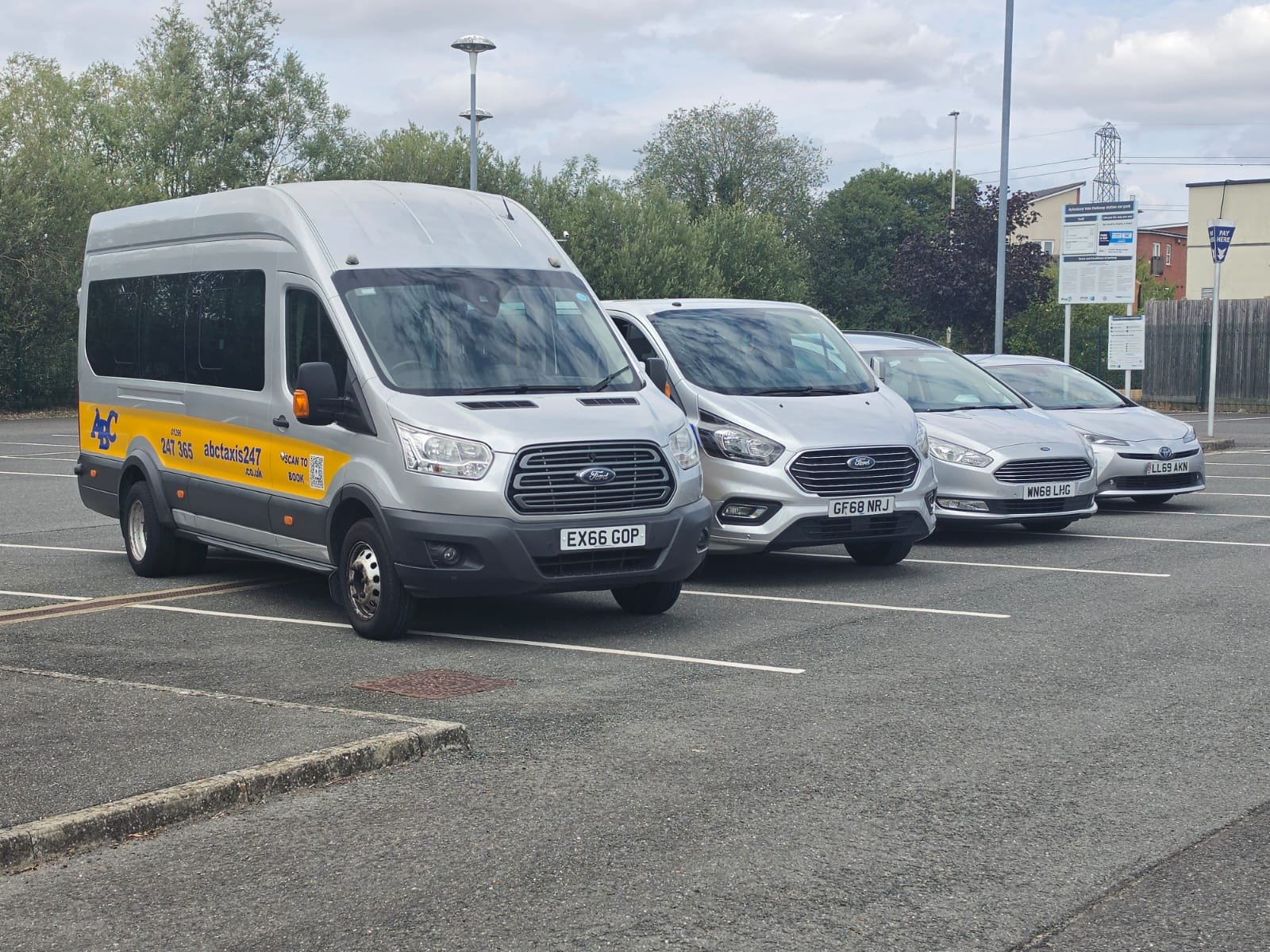
If you are based in Aylesbury or the surrounding area and decide that a pre-booked local taxi suits your journey, you can explore the services offered by ABC Taxis 247. For airport journeys, the airport transfers page has further information.

Taxi vs Uber in the UK: What’s Different When You Pre-Book?
Quick Answer
There is no single answer to whether a taxi or Uber is cheaper, better or more convenient in the UK. They are not direct equivalents — they operate under different booking rules, different pricing structures and different frameworks: a taxi is a licensed vehicle category, while Uber is a booking platform. The right choice depends on where you are, when you are travelling, what you need and what is available.
This guide explains how each option actually works in the UK — particularly when you pre-book — so that you can compare them for your own journey.
Taxi vs Uber: At-a-Glance Comparison
Note: Uber is compared here as a booking platform, not as an equivalent legal vehicle category. Many Uber journeys are provided by locally licensed private hire vehicles and drivers, but the services available through Uber vary by location — for example, Uber also offers Black Cab booking in London.
Taxi, Hackney Carriage and Private Hire: What’s the Difference?
Most people use the word “taxi” for any car they hire for a journey. In everyday conversation, that is perfectly normal. But in England, hackney carriage and private hire are distinct licensing categories — and understanding the difference helps explain why booking, pricing and availability can vary so much. (Scotland and Northern Ireland operate under their own frameworks, covered later in this guide.)
Hackney carriage
A hackney carriage is the legal term for what most people would call a taxi. A licensed hackney carriage can legally pick up passengers without a prior booking — either by being hailed on the street or from a taxi rank — and must generally use a calibrated meter to charge fares no higher than those set by the Council. They can also be used for pre-booked journeys.
The key features: you can hail one, use one from a rank, or book one in advance. The meter runs during the journey. The maximum fare is set by the local licensing authority — and those maximum fares differ between council areas.
Private hire vehicle
A private hire vehicle cannot be hailed or use ranks and may only carry out journeys that have been pre-booked through a licensed operator; its fares are not controlled by the Council and are agreed in advance.
This category covers most local minicab and taxi companies across the UK. When you phone a local firm and book a car for a specific time, you are almost always booking a private hire vehicle — even though you might call it a taxi.
The fare is typically agreed before the journey starts, and it is set by the operator rather than the council.
Why this matters
The distinction has real practical consequences. A hackney carriage driver can legally stop for you if you wave one down. A private hire driver cannot — a journey must be booked through a licensed operator before the journey begins. The pricing is different. The regulatory oversight is different. And when you compare either of these with Uber, understanding where Uber fits in the framework matters too.
Is Uber a Taxi or Private Hire?
Uber is neither — at least not in the sense of being a vehicle-licensing category. Uber is a booking platform and service provider, not a separate vehicle-licensing category. The vehicles and drivers that fulfil Uber journeys are licensed under the existing local frameworks.
In practice, many Uber journeys in the UK are provided by locally licensed private hire vehicles and drivers. However, the services available through Uber can vary by location. For example, Uber also offers Black Cab booking in London — meaning that, in that case, the journey is fulfilled by a licensed hackney carriage rather than a private hire vehicle.
What makes Uber distinctive is its operating model: bookings are made through the app, passengers are matched with available drivers algorithmically, and fares are calculated by Uber’s pricing system rather than agreed by phone with an operator or run on a council-set meter (except where the service booked is itself a metered vehicle category).
So when people ask “is Uber a taxi?”, the short answer is: Uber itself is a platform. Whether a particular Uber journey is provided by a private hire vehicle or another vehicle type depends on the service selected and the location.
Pre-Booking a Taxi vs Booking Uber
This is the core of the comparison, and it is where the practical differences are sharpest.
What “pre-booked” actually means
In UK licensing terms, “pre-booked” means the journey has been arranged before travel — through a licensed operator. It does not necessarily mean the journey was booked days or weeks in advance. A phone call made 15 minutes before you need to leave still counts as a pre-booked journey if the booking is placed with a licensed operator before the vehicle arrives.
This is an important distinction. All private hire vehicle journeys must be pre-booked through a licensed operator — it is a legal requirement. But “pre-booked” is not the same as “booked well in advance” or “advance reservation.” A booking made at short notice through a licensed operator is still a pre-booked journey.
An advance reservation — arranging a vehicle for a specific date and time in the future — is a separate concept. Many local taxi and private hire operators offer this, and Uber offers it through Uber Reserve. But the guarantees, mechanisms and terms differ.
Pre-booking with a local taxi or private hire operator
When you phone a local taxi or private hire company and book a journey — whether for 20 minutes from now or for 6 a.m. next Tuesday — you are placing a booking directly with a licensed operator. Depending on the company:
The arrangement is between you and that operator. The specific terms — including what happens if a vehicle is unavailable, how cancellations are handled and whether a particular driver is guaranteed — will depend on the operator. Not every booking with every operator automatically guarantees a specific vehicle assignment, though many operators do confirm a driver allocation. If certainty of driver assignment matters, confirm this directly with the operator when booking.
Booking Uber
Riders will always see the upfront fare before they request a ride. For the majority of Uber trips, you will see the price of the trip before accepting — this is called Upfront Pricing, and is based on the best available route between your chosen pick-up and drop-off points.
An on-demand Uber booking works like this: you enter your destination, the app shows you an upfront fare, you request the ride, and the system matches you with an available driver in the area. There is no phone call and no human dispatcher. The matching is algorithmic and depends on driver availability at that moment.
Uber Reserve: advance booking
Uber Reserve allows riders to request a journey in advance. However, a reservation should not be treated as an unconditional guarantee that a particular driver will complete the journey. The applicable reservation and driver-assignment terms depend on Uber’s current service terms.
Reserve is not available in all locations and its availability can vary. If advance booking through Uber matters for your journey, check the Uber app to see whether Reserve is offered in your area, and review Uber’s current terms for how reservations and driver assignment work.
Does pre-booking guarantee your ride?
Not automatically — with either option.
With a traditional local taxi or private hire operator, a confirmed booking is a direct arrangement with the operator. However, the specific terms of that arrangement — including what constitutes a confirmed booking, whether a specific driver has been assigned, and what happens if circumstances change — depend on the operator. If you need certainty that a vehicle will be available, confirm the arrangements directly when you book.
With Uber Reserve, the mechanism is different: the reservation is a request within Uber’s system, handled under Uber’s current service terms. A reservation does not automatically mean a specific driver has unconditionally committed to the journey at the point you make the request. If certainty matters, review the current terms in the app before relying on a reservation.
Taxi vs Uber Prices in the UK
This is the question most people really want answered: is Uber cheaper than a taxi, or is a taxi cheaper than Uber? The honest answer is that there is no universal UK-wide answer, and any source that tells you otherwise is oversimplifying.
Here is why.
Hackney carriage fares
Hackney carriage fares are regulated by the local licensing authority. The council sets maximum tariffs, and the meter cannot exceed them. Fares set for hackney carriages are reviewed annually. Comparison is made with fares charged in neighbouring authorities and the relevant retail price index rates are taken into consideration.
This means the metered fare for the same journey can be different in different council areas. A five-mile journey in one borough is not necessarily the same price as a five-mile journey in the next.
Private hire fares
A private hire vehicle’s fares are not controlled by the Council and are agreed in advance. This means every private hire operator sets their own prices. Some may be higher than the local hackney carriage tariff, some may be lower — it depends on the operator, the route and the time of day.
Uber fares
At Uber, fares are dynamically priced. This means that the fare a rider sees is based on variables that are subject to change over time. These variables include (but are not limited to) the estimated time and distance of the predicted route, estimated traffic and the number of riders and drivers using Uber at a given moment.
Dynamic pricing may mean fares temporarily increase. This encourages more drivers to get on the road and head to areas of the city where demand for rides is higher.
In plain terms: an Uber fare for the same journey can be different at 2 p.m. on a quiet Tuesday and at 11 p.m. on a Saturday night, or during a major event, a transport disruption or bad weather.
So which is cheaper?
It depends. A metered taxi fare is predictable — the tariff is published and the meter runs on time and distance. A pre-booked private hire fare is typically agreed upfront. An Uber fare is shown before you request the ride, but it reflects real-time demand conditions. Any of these could be the cheapest option for a given journey at a given time.
This article does not provide fabricated fare examples, because any such example would be misleading. If you want to compare costs for a specific journey, the only accurate method is to check the actual fare for each option at the time you need to travel.
Can the Price Change?
Hackney carriage
A metered hackney carriage fare is calculated as you travel, based on the published tariff. The meter runs on time and distance. Barring a tariff change by the council, the pricing structure is consistent. You will not experience surge pricing in a metered hackney carriage.
Private hire
A fare that has been quoted and agreed in advance by a private hire operator should normally be honoured, subject to the terms agreed. If you change the route or destination, or if the journey is materially different from what was quoted, the fare may be adjusted. Terms vary between operators.
Uber
The price you pay for a trip will be the Upfront Fare price in almost all cases. However, there will be some trips which end up being significantly different than planned (different route taken, longer time than expected, etc) — in these cases, the upfront price will not apply and the actual fare will be calculated on the actual time and distance.
The final fare may also deviate from the Upfront Fare if you update the trip (such as adding a stop or changing the destination), in which case you would be shown a new mid-trip fare. You will be asked to confirm this updated price before the trip continues.
In addition, the upfront fare itself is influenced by dynamic pricing at the time of the request. There are times when so many people are requesting trips that there aren’t enough cars on the road. Bad weather, rush hour and special events may cause unusually large numbers of people to want to request a trip at the same time. In these cases of very high demand, prices may increase. This is called surge pricing. Whenever rates are raised due to surge pricing, the Uber app lets riders know.
Which Is Easier to Find: a Taxi or Uber?
This depends entirely on where you are and when you need to travel.
Hackney carriages
If you are in a city centre with taxi ranks, or on a busy street, hailing a hackney carriage or finding one at a rank may be straightforward. In smaller towns, suburban areas or rural locations, hackney carriages may be less visible or not available without booking.
Local private hire operators
Private hire vehicles are available by pre-booking through a licensed operator. Many smaller towns and rural areas across the UK have local private hire operators that provide coverage where app-based services may be limited or unavailable. The fleet size, booking process and response time will vary by operator.
Uber
Uber’s availability depends on real-time driver supply in the area and on whether Uber operates in that location at all. In major cities, multiple drivers may be nearby at most times. In smaller towns, suburbs and rural areas, wait times may be longer, fewer vehicle options may be available, and at certain times no drivers may be nearby at all.
Neither option guarantees instant availability at all times and in all places. The most practical approach is to check what is available in your specific area for your specific journey.
How Do You Pay for a Taxi vs Uber?
Hackney carriages and private hire vehicles
Payment methods vary between operators and between individual vehicles. Many operators now accept card and contactless payment alongside cash, but this is not universal. Some vehicles may accept only cash; others may prefer card. If you plan to pay by a specific method, it is worth confirming with the operator or driver before the journey. A receipt may or may not be provided automatically — if you need one, ask in advance.
Uber
Uber payments are normally handled through the app using the payment method available on the account. A digital receipt is provided through the app after the trip.
The practical distinction is that Uber provides a standardised in-app payment and receipt process, while traditional taxi and private hire operators may accept different payment methods — so check when booking.
Are Taxi and Uber Drivers Licensed?
Yes — drivers require licensing by a local authority in the UK, whichever way the journey is booked.
Sections 51 and 59 of the Local Government (Miscellaneous Provisions) Act 1976 require that a council shall not grant a driver’s licence to drive a private hire vehicle or hackney carriage unless they are satisfied that an applicant is a fit and proper person.
This applies to both hackney carriage drivers and private hire drivers — including drivers who provide journeys through Uber.
To determine this, applicants must provide an Enhanced Disclosure Certificate from the Disclosure and Barring Service (DBS).
The knowledge test includes questions about the conditions of the licence, the laws relating to the licence, geographical knowledge of the area, customer care and disability awareness. Note: specific test requirements vary by council area.
Vehicles are also subject to licensing and inspection requirements set by the local authority. All vehicles are subject to and must pass the council’s testing requirements before a licence is issued.
London: a specific case
In London, Transport for London (TfL) acts as the licensing authority. London’s black cab drivers must pass The Knowledge — an in-depth geographical examination that can take years to complete. This is specific to London hackney carriages and does not apply to private hire drivers in London or to taxi/PHV drivers elsewhere in the UK.
This article does not rank the safety of one option over another. Drivers providing journeys — whether booked through a local operator or through Uber — are subject to licensing, background checks, vehicle inspections and local authority oversight, but the specific standards and processes vary between licensing authorities.
Taxi vs Uber for Disabled Passengers
Accessibility is a practical consideration that is often overlooked in taxi-vs-Uber comparisons.
Legal duties
Section 165 of the Equality Act 2010 imposes duties upon the drivers of designated vehicles when dealing with disabled passengers travelling in wheelchairs. Those duties include: to carry the passenger whilst in the wheelchair; not to make any additional charge for doing so; if the person chooses to sit in a passenger seat, to carry the wheelchair; to take such steps as are reasonably necessary to ensure the passenger is carried in safety and reasonable comfort; and to give the passenger such mobility assistance as is reasonably required.
Section 165(7) of the Act creates an offence where the driver of a designated taxi or private hire vehicle fails to comply with a duty imposed upon them.
The Taxis and Private Hire Vehicles (Disabled Persons) Act 2022 amended the Equality Act 2010 to extend certain duties to all disabled passengers — not only those in wheelchairs. This Act came into force on 28 June 2022.
Assistance dogs
Sections 168 and 170 of the Equality Act require taxis and private hire vehicles to carry all assistance dogs accompanying disabled people and to do so without any additional charge.
Taxi and private hire vehicle drivers cannot refuse a passenger because they have an assistance dog, and passengers cannot be charged more because they have an assistance dog.
These duties apply to both hackney carriage and private hire drivers — including Uber drivers.
Wheelchair-accessible vehicles in practice
Not every hackney carriage or private hire vehicle is wheelchair accessible. A vehicle is “designated” as wheelchair accessible for the purposes of Section 165 if it appears on a list maintained by the local licensing authority under Section 167 of the Act.
All licensed London taxis are designated by default. Outside London, the proportion of wheelchair-accessible vehicles varies significantly by council area.
When booking an Uber, wheelchair-accessible vehicle options depend on local availability. Uber offers specific vehicle categories for accessibility in some cities, but this is not guaranteed in all areas. If you require a wheelchair-accessible vehicle, check the Uber app for available options in your area, or contact a local operator that can confirm a suitable vehicle.
If you are based in Aylesbury or the surrounding area and require a wheelchair-accessible vehicle, you can find more information on the wheelchair-accessible taxi service page.
Why Taxi and Uber Rules Can Differ Across the UK
One of the most common errors in taxi-vs-Uber comparisons is assuming that the rules are the same everywhere in the UK. They are not.
England (outside London)
Licensing is managed by each local district, borough or unitary council under the Local Government (Miscellaneous Provisions) Act 1976 and the Town Police Clauses Act 1847. Maximum hackney carriage tariffs are set by each council individually. Driver testing, vehicle standards and conditions of licence vary between authorities.
London
Transport for London (TfL) is the licensing authority for private hire vehicles and operators in London. London hackney carriages (black cabs) are licensed under separate legislation. All London taxis are wheelchair accessible. London’s licensing system has specific requirements — including The Knowledge for hackney carriage drivers — that do not apply elsewhere.
Scotland
Taxi and private hire licensing in Scotland is governed by the Civic Government (Scotland) Act 1982, not by the same legislation that applies in England and Wales. The practical framework is similar in many respects — councils license drivers and vehicles, and there is a distinction between taxis and private hire cars — but the specific rules, conditions and tariff-setting processes may differ.
Wales
Wales operates under the same primary legislation as England (outside London) for hackney carriage and private hire licensing. Individual Welsh councils set their own tariffs and conditions.
Northern Ireland
Taxi licensing in Northern Ireland is managed by the Department for Infrastructure rather than by individual councils. The rules and categories differ from those in England, Scotland and Wales.
What this means for the taxi vs Uber comparison
The answer to “which is cheaper?” or “which is better regulated?” can genuinely differ depending on where you are. An article that compares London black cabs with Uber is not describing the same situation as a comparison in a medium-sized town in the Midlands or a rural area in Wales. This guide covers the structural differences — but your local licensing authority’s rules are the ones that apply to your journey.
What Does This Mean for Passengers in Aylesbury?
For passengers in and around Aylesbury and the wider Buckinghamshire area, the general comparison in this guide applies in the same way as elsewhere — but the local regulatory framework provides a useful concrete example.
Buckinghamshire Council licenses hackney carriages, which can legally pick up passengers without a prior booking and must generally use a calibrated meter to charge fares no higher than those set by the Council. Private hire vehicles licensed by Buckinghamshire Council may only carry out journeys that have been pre-booked through a Buckinghamshire Council licensed operator; their fares are not controlled by the Council and are agreed in advance.
Buckinghamshire Council has recently updated its Hackney Carriage and Private Hire Licensing Policy, with changes shaped by engagement with drivers, operators, disability groups and residents. The revised policy introduces improvements to driver application processes and changes to vehicle standards, including accessibility requirements.
If you are considering your options for local journeys, airport transfers or any other pre-booked travel from Aylesbury, the practical question is whether a local licensed taxi or private hire service, or an app-based service, better suits the specific journey. For more about local taxi services, you can visit the taxi services in Aylesbury page.
Which Option Fits Your Journey?
Rather than declaring a winner, here are some of the practical scenarios where one option may suit your needs better than the other.
A pre-booked local taxi or private hire may suit you if:
Uber may suit you if:
Neither list is exhaustive, and neither implies one option is universally superior.
What Should You Check Before Booking?
Before choosing between a taxi, a private hire vehicle or Uber for your journey, work through this checklist:
Frequently Asked Questions
Is Uber cheaper than a taxi in the UK?
There is no universal answer. Uber uses dynamic pricing, which means the fare for the same journey can be different depending on the time of day, demand and driver availability. Hackney carriage fares are set by the local council and run on a meter. Private hire fares are agreed with the operator. Any of these could be cheapest for a given journey. The only way to compare accurately is to check the actual fare for your specific journey at the time you need to travel.
Is Uber a taxi?
No — Uber is a booking platform, not a vehicle-licensing category. In England, a “taxi” in law is a hackney carriage — a vehicle licensed to pick up passengers from the street or a rank without a prior booking. Many Uber journeys are provided by locally licensed private hire vehicles and drivers, though the services available through Uber vary by location — Uber also offers Black Cab booking in London. In everyday language, many people use “taxi” to describe all of these.
What is the difference between Uber and a taxi?
The main differences are in how you book, how pricing works and what each actually is. A hackney carriage is a licensed vehicle category — it can be hailed or found at a rank and charges metered fares up to a council-set maximum. Uber is an app-based booking platform — journeys are booked through the app, fares are calculated dynamically and shown upfront, and the journeys are typically fulfilled by locally licensed drivers. A traditional private hire vehicle, meanwhile, must be pre-booked through a licensed operator and charges an agreed fare.
Can you pre-book a taxi?
Yes. Hackney carriages can be pre-booked as well as hailed or found at a rank. Private hire vehicles must be pre-booked — it is a legal requirement. Pre-booking is the standard operating model for most local taxi and private hire firms in the UK. “Pre-booked” means the journey has been arranged through a licensed operator before travel — it does not necessarily mean it was booked days in advance.
Does Uber Reserve guarantee a driver?
Not unconditionally. Uber Reserve allows riders to request a journey in advance, but a reservation should not be treated as an unconditional guarantee that a particular driver will complete the journey. The applicable reservation and driver-assignment terms depend on Uber’s current service terms, and Reserve is not available in all locations. If certainty matters, review the current terms in the app before relying on a reservation.
Can Uber prices change after booking?
The price you pay for a trip will be the Upfront Fare price in almost all cases. However, the fare may change if you alter the destination or add stops during the journey. If a trip ends up being significantly different than planned, the upfront price may not apply and the fare may be calculated on actual time and distance. The upfront fare you are shown before requesting a ride already reflects any dynamic pricing in effect at that moment.
Do taxis have fixed prices?
It depends on the type of vehicle. A hackney carriage generally charges metered fares — the price is calculated during the journey based on time and distance, up to a council-set maximum tariff. The tariff itself is published and consistent, but the total fare depends on the actual journey. A private hire vehicle typically quotes a fare in advance, which is agreed before the journey begins. Whether this constitutes a “fixed price” depends on the terms agreed with the operator.
Can taxis be booked through an app?
Yes. Many traditional taxi and private hire operators now offer app-based or online booking alongside phone booking. The availability of app booking varies by operator. Some use their own apps, some use third-party booking platforms, and some accept bookings by phone only. Uber is app-only.
Are taxis safer than Uber?
This article does not rank the safety of one option over another, because there is no single authoritative source that makes a direct, evidence-based comparison. What can be stated factually is that drivers providing journeys — whether booked through a local operator or through Uber — are required to be licensed by a local authority, which involves enhanced DBS background checks, medical assessments and vehicle inspections. The specific standards and processes vary by licensing authority.
Sources and Further Reading
Need a Taxi in Aylesbury?
If you are based in Aylesbury or the surrounding area and decide that a pre-booked local taxi suits your journey, you can explore the services offered by ABC Taxis 247. For airport journeys, the airport transfers page has further information.
Share This: